What Is NDIS Assistance with Daily Life? A Complete Guide (2026)
Living independently doesn't always mean doing everything on your own. For many Australians living with disability, having the right support makes everyday life safer, easier and more enjoyable. Whether it's getting ready in the morning, preparing meals, keeping your home clean or attending community activities, practical assistance can help you maintain your independence while achieving your personal goals.
One of the most commonly funded supports under the National Disability Insurance Scheme (NDIS) is Assistance with Daily Life. This Core Support category provides practical help with everyday activities, allowing eligible participants to live more independently at home and within their community.
In this guide, we'll explain what NDIS Assistance with Daily Life includes, who is eligible, what your funding can cover, and how to maximise your NDIS plan. We'll also explore how Leah Bett Nursing Services supports participants across Alice Springs and surrounding communities with compassionate, person-centred care.
What Is NDIS Assistance with Daily Life?
NDIS Assistance with Daily Life is a Core Support that funds help with everyday personal activities that participants may find difficult due to their disability. The purpose is not simply to complete tasks on someone's behalf but to provide the right level of support while encouraging independence wherever possible.
These services can be delivered in your own home, shared accommodation or within the community, depending on your individual needs and goals.
Support may be provided for a few hours each week or as part of a more comprehensive care plan, including overnight or 24-hour assistance for participants with higher support needs.
Unlike Capacity Building supports, which focus on developing long-term skills, Assistance with Daily Life provides immediate practical support that helps participants manage their daily routines safely and confidently.
Assistance with Daily Life vs Improved Daily Living
Many people confuse
Assistance with Daily Life and
Improved Daily Living because the names sound similar. However, they belong to different NDIS funding categories and serve different purposes.
| Assistance with Daily Life | Improved Daily Living |
|---|---|
| Funded under Core Supports | Funded under Capacity Building |
| Helps with everyday personal tasks | Helps build skills for greater independence |
| Practical day-to-day assistance | Therapy and skill development |
| Ongoing support | Long-term capacity building |
| Includes personal care, cleaning and meal preparation | Includes occupational therapy, physiotherapy, speech therapy and other allied health services |
A simple way to remember the difference is:
Assistance with Daily Life helps you manage today, while Improved Daily Living helps you become more independent in the future.
Many participants receive funding for both categories because they work together to support everyday living and long-term independence.
Who Is Eligible for Assistance with Daily Life?
Eligibility depends on your individual circumstances and NDIS plan. During your planning meeting, the National Disability Insurance Agency (NDIA) considers whether the support is reasonable and necessary based on your disability and personal goals.
You may be eligible if your disability affects your ability to:
- Shower, dress or maintain personal hygiene
- Prepare meals safely
- Complete household chores
- Move around your home
- Attend appointments independently
- Participate in community activities
- Manage daily routines without assistance
The amount of funding you receive is personalised and based on your functional capacity, living arrangements, support network and goals.
What Does NDIS Assistance with Daily Life Cover?
The range of funded supports varies depending on each participant's individual needs. Below are some of the most common services funded under this category.
Personal Care and Hygiene
Personal care is one of the most frequently accessed supports. A qualified support worker can assist with everyday routines while respecting your dignity, privacy and personal preferences.
Support may include:
- Showering and bathing
- Dressing and grooming
- Oral hygiene
- Toileting and continence support
- Hair care
- Assistance with eating and drinking
- Medication reminders and supervision (where appropriate)
The goal is to help participants maintain good health while promoting as much independence as possible.
Household Tasks
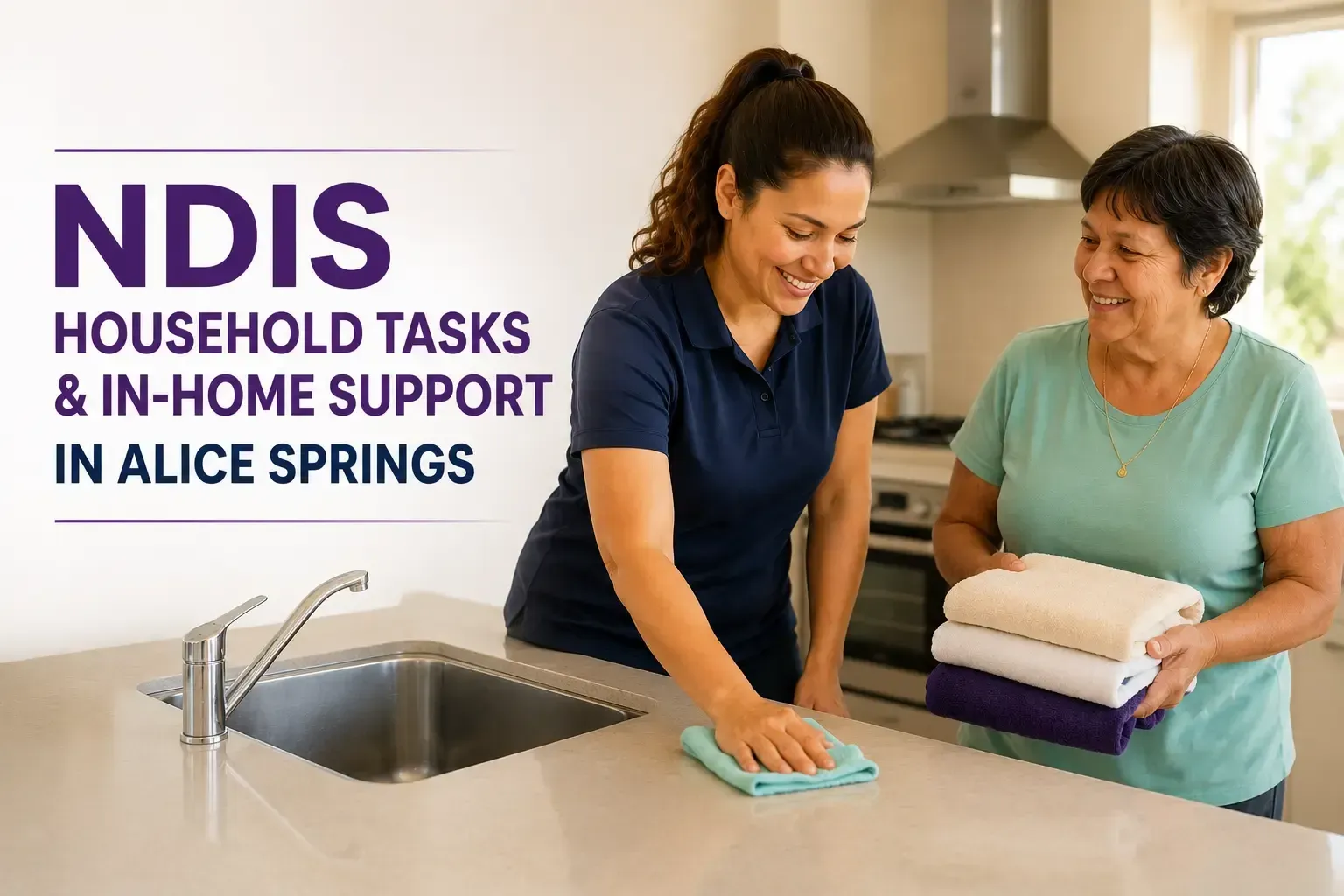
Maintaining a safe, clean and comfortable home is essential for wellbeing.
Depending on your NDIS plan, funding may cover assistance with:
- Vacuuming and mopping
- Dusting and general cleaning
- Laundry and ironing
- Changing bed linen
- Washing dishes
- Tidying living spaces
- Basic gardening
- Disability-related household maintenance
These supports reduce everyday stress and help participants continue living safely in their own homes.
Meal Preparation and Nutrition
Preparing nutritious meals can become difficult for people living with physical, cognitive or psychosocial disabilities.
Assistance with Daily Life funding may include support for:
- Meal planning
- Grocery shopping
- Food preparation
- Cooking healthy meals
- Assistance with feeding where required
It's important to note that while support worker time may be funded, the cost of groceries and ingredients is generally not covered under the NDIS.
Community Participation and Social Support
Maintaining social connections plays an important role in both physical and mental wellbeing.
Daily living supports can assist participants to:
- Attend medical appointments
- Visit family and friends
- Participate in social groups
- Access education or employment
- Attend recreational activities
- Go shopping
- Use public transport safely
These supports help participants remain active members of their community while building confidence and independence.
Supported Independent Living (SIL)
Participants with higher support needs may receive funding for Supported Independent Living (SIL).
SIL provides ongoing assistance within a shared or individual living environment and may include:
- Personal care
- Household management
- Daily routine support
- Medication assistance
- Overnight support
- 24-hour care where required
SIL funding is based on individual assessments and is designed for participants who require regular support throughout the day and night.
Short-Term Accommodation (STA) and Respite
Short-Term Accommodation (STA), often referred to as respite care, provides temporary support when participants or their carers require a short break.
STA can include:
- Accommodation
- Personal care
- Meals
- Community participation
- Recreational activities
- 24-hour support
This funding gives participants the opportunity to build new skills, meet new people and experience greater independence while providing carers with valuable respite.
Nursing and Clinical Supports
For participants with complex health needs, nursing supports may also form part of their daily care.
Depending on individual circumstances, support may include:
- Wound care
- Continence management
- Diabetes support
- Medication management
- Catheter care
- PEG feeding support
- Clinical health monitoring
At Leah Bett Nursing Services, our experienced Registered Nurses and dedicated support workers provide personalised nursing and disability services that focus on improving quality of life while helping participants achieve their NDIS goals.
What Doesn't NDIS Assistance with Daily Life Cover?
While Assistance with Daily Life provides funding for many essential supports, there are some everyday expenses and services that are not covered by the NDIS. Understanding these exclusions can help you manage your budget more effectively and avoid unexpected costs.
Generally, NDIS funding does not cover:
- Groceries and food ingredients
- Rent, mortgage repayments or utility bills
- General household items such as cleaning products and toiletries
- Entertainment expenses, tickets or holiday costs
- Everyday living costs that everyone pays, regardless of disability
- Home modifications (these are funded under separate NDIS supports)
- Medical services funded by Medicare or private health insurance
If you're ever unsure whether a support is funded, speak with your Support Coordinator, Plan Manager or NDIS provider before making a purchase.
How Much Funding Can You Receive?
There is no fixed amount for Assistance with Daily Life funding. Every NDIS plan is tailored to the participant's individual needs, goals and living arrangements.
During your planning meeting, the NDIA considers factors such as:
- Your disability and functional capacity
- Your daily support requirements
- Your current living situation
- Informal support provided by family or carers
- Your short-term and long-term goals
Your funding is designed to cover supports that are considered reasonable and necessary to help you live as independently as possible.
As support costs vary depending on the day, time and level of care required, it's important to understand the current NDIS Pricing Arrangements.
Example 2025–26 Maximum Price Limits
| Support | Approximate Maximum Rate* |
|---|---|
| Personal Care (Weekday) | $70.23/hour |
| Household Tasks | $58.03/hour |
| Domestic Assistance | $59.06/hour |
| High Intensity Personal Care | $75.98/hour |
| Registered Nurse | $123.65/hour |
| Clinical Nurse | $143.04/hour |
| Night-Time Sleepover | $297.60/shift |
*Maximum prices are based on the current NDIS Pricing Arrangements and may change each financial year. Your provider should always explain applicable rates before services commence.
Can NDIS Funding Cover Overnight Support?
Yes. Participants who require assistance during the night may receive funding for overnight or sleepover support, provided it is considered reasonable and necessary.
Sleepover support allows a support worker to remain overnight and assist if required. This is particularly beneficial for participants who may need help with:
- Overnight personal care
- Medication support
- Mobility assistance
- Emergency situations
- Health monitoring
Participants with more complex needs may also receive funding for active overnight support, where a support worker remains awake throughout the night to provide ongoing assistance.
How to Check if Assistance with Daily Life Is Included in Your Plan
If you're unsure whether your current NDIS plan includes this funding, you can:
- Log in to your myplace portal or my NDIS app.
- Review your Core Supports budget.
- Look for Assistance with Daily Life or Assistance with Daily Personal Activities.
- Check your remaining budget balance.
If you need help understanding your plan, your Local Area Coordinator (LAC), Support Coordinator or Plan Manager can explain your funding and how it can be used.
Can Family Members Provide Daily Living Supports?
In some circumstances, yes.
The NDIS generally expects participants to receive funded supports from registered or non-registered providers rather than family members who live in the same household.
However, exceptions may apply where:
- Suitable providers are unavailable
- Participants live in remote locations
- There are exceptional circumstances
- It is considered the best outcome for the participant
These situations are assessed individually by the NDIA.
Tips to Make the Most of Your NDIS Funding
Making informed decisions about your supports can help your funding last longer and better meet your needs.
Clearly Explain Your Needs
During your planning or reassessment meeting, describe exactly what assistance you need throughout the day. The more information you provide, the easier it is for the NDIA to determine appropriate funding.
Monitor Your Budget
Regularly review your remaining funding to avoid overspending before your plan ends.
Review Your Goals
As your circumstances change, your supports should change too. If your daily needs increase or decrease, discuss this during your next plan review.
Choose the Right Provider
A good provider doesn't simply complete tasks—they work with you to build confidence, independence and quality of life through personalised support.
Why Choose Leah Bett Nursing Services?
Finding the right NDIS provider is about more than receiving support—it's about working with a team that genuinely understands your goals, respects your choices and delivers compassionate care every day.
At Leah Bett Nursing Services, we proudly support NDIS participants across Alice Springs and surrounding communities with personalised nursing and disability services tailored to individual needs.
Our experienced Registered Nurses and qualified Support Workers provide a wide range of services, including:
- Assistance with daily personal activities
- Community nursing
- Medication management
- Continence support
- Diabetes management
- Household assistance
- Community participation
- Supported Independent Living (SIL)
- Short-Term Accommodation (STA)
- Complex nursing care
We take the time to understand each participant's lifestyle, preferences and goals, creating personalised support plans that encourage independence while delivering high-quality clinical care when required.
Whether you need a few hours of assistance each week or ongoing daily support, our caring team is here to help you live confidently and independently.
Supporting Your Independence Every Day
NDIS Assistance with Daily Life is designed to help participants live safely, confidently and independently by providing practical support with everyday activities. Whether you need help with personal care, household tasks, meal preparation or community participation, the right support can make a meaningful difference to your quality of life.
At Leah Bett Nursing Services, we're committed to delivering compassionate, person-centred care that empowers participants to achieve their goals while maintaining their independence.
If you're looking for trusted NDIS Assistance with Daily Life services in Alice Springs, our experienced nursing and disability support team is here to help. Contact Leah Bett Nursing Services today to discuss your needs and discover how we can support you on your NDIS journey.